

أهداف الدرس
- I can match words about the law with their meanings.
- I can discuss the purpose of laws using the printed text.
- I can distinguish printed evidence from information that needs the listening recording.
الشرح خطوة بخطوة
الموضع محفوظ على هذا الجهاز.
المقطع 1 من 3The Law3:28
مقاطع الدرس
0 من 3 مكتملThe Law(ص 15)
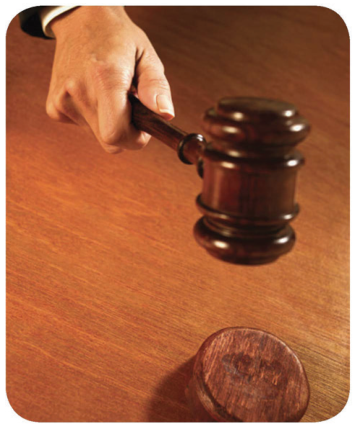
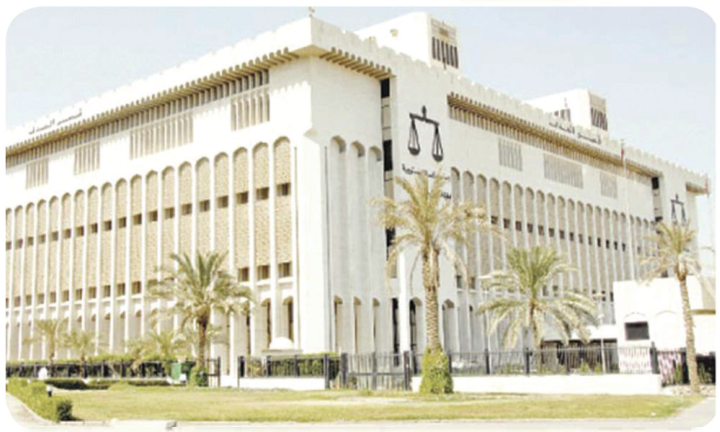
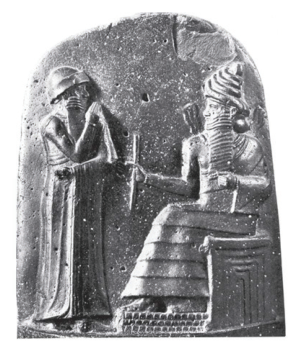
- a What happens in this place?
- b What do you think the scales represent?
- c What do you know about Hammurabi’s code? How is it related to these pictures?
- a enforce (V)
- b govern (V)
- c guilty
- d innocent
- e jury
- f legal
- g principle
- h property
- i prove (V)
- 1 not responsible for a crime
- 2 something valuable which belongs to someone
- 3 group of people in court who decide whether someone is guilty
- 4 rule / belief
- 5 control
- 6 responsible for a crime
- 7 show that something is true
- 8 relating to the law
- 9 put into practice / carry out
- a 9
- b 5
- c 6
- d 1
- e 3
- f 8
- g 4
- h 2
- i 7
- a Can you think of an action that everyone in every country thinks is wrong?
- b How long ago do you think the first code of law was made?
- c Who makes the laws in most societies?
- d You are going to hear about three different types of law, including criminal law and civil law. What is the third type of law the speaker mentions?
- (1.1) Listen to the lecture and check the answers to the questions in exercise 3.
- adoption, civil,
- code of law, consultation,
- define, enforce, govern,
- guilty, impose, innocent,
- judiciary, jury, legal,
- penalty, persuasion,
- principle, property, prove,
- tolerant, violence, welfare
Think and speak: Discussing the law; expressing opinion(ص 16)
A tolerant society(ص 16)
Just like in the rest of the world, Kuwaiti laws are made to protect the individual rights of the people living there. Kuwait has a well-structured and clearly-defined judiciary, composed of summary, military and religious courts, amongst others. The Emir, in consultation with the Justice Ministry, appoints judges in the regular courts. The law is drawn from the teachings of the Holy Qur’an and protects the rights of all people of all religious persuasions, ensuring a safe, just and tolerant society.(ص 16)
- a What is the main purpose of sending people to prison: to punish them, or to protect society?
- b How do Islamic values influence the system of laws in Kuwait?
الملخص
- Enforce means put into practice / carry out.
- Guilty and innocent have opposite meanings in the matching activity.
- The printed passage says Kuwaiti laws protect individual rights.
- The passage links the law with the teachings of the Holy Qur’an.
الأفكار الرئيسية
- Use the printed evidence to support reading answers.
- An opinion needs a reason; a listening answer needs the original recording.
الأسئلة المهمة
What does govern mean in the matching activity?
Control.
الكتاب صفحة 15
What is a jury in the printed definition?
A group of people in court who decide whether someone is guilty.
الكتاب صفحة 15
What do Kuwaiti laws protect, according to the passage?
The individual rights of the people living there.
الكتاب صفحة 16
Who appoints judges in the regular courts, according to the passage?
The Emir, in consultation with the Justice Ministry.
الكتاب صفحة 16
What kind of society does the passage describe as its aim?
A safe, just and tolerant society.
الكتاب صفحة 16
اختبار الدرس
أجب ثم اضغط «صحّح» لترى درجتك وتفسير كل إجابة.
الواجب
أسئلة تطبيقية لتحلها في البيت. يمكنك طباعتها من الأعلى.
مصطلحات الدرس
- enforce
- Put into practice / carry out. The activity asks you to match enforce with this meaning.
- govern
- Control. Govern is a verb in the activity.
- innocent
- Not responsible for a crime. Innocent is opposite in meaning to guilty here.
- jury
- Group of people in court who decide whether someone is guilty. The activity gives this definition of jury.
تمارين الكتاب كاملة
كل سؤال ونشاط وتمرين ورد في صفحات هذا الدرس، بنصه وإجابته النموذجية. 7 تمرينًا.
1Look at the pictures and discuss these questions. a What happens in this place? b What do you think the scales represent? c What do you know about Hammurabi’s code? How is it related to these pictures?(ص 15)
Discussion guidance: a Describe the place and explain its connection with the law. b Give your interpretation of the scales and a reason. c State only what you know with evidence; the printed pages do not supply a historical explanation of the code.
2You are going to hear a talk about the law. Before you listen, match these words from the talk with their meanings. a enforce (V) b govern (V) c guilty d innocent e jury f legal g principle h property i prove (V) 1 not responsible for a crime 2 something valuable which belongs to someone 3 group of people in court who decide whether someone is guilty 4 rule / belief 5 control 6 responsible for a crime 7 show that something is true 8 relating to the law 9 put into practice / carry out(ص 15)
a 9; b 5; c 6; d 1; e 3; f 8; g 4; h 2; i 7.
3You are going to listen to a lecture about law-making. Before you listen, try to answer these questions. Discuss your answers with a partner. a Can you think of an action that everyone in every country thinks is wrong? b How long ago do you think the first code of law was made? c Who makes the laws in most societies? d You are going to hear about three different types of law, including criminal law and civil law. What is the third type of law the speaker mentions?(ص 15)
a Discuss your view without claiming to know everyone’s opinion. b–d The original track 1.1 is unavailable. These listening answers cannot be confirmed from the printed pages. No answer is guessed.
4(1.1) Listen to the lecture and check the answers to the questions in exercise 3.(ص 15)
The original track 1.1 is unavailable. These listening answers cannot be confirmed from the printed pages. No answer is guessed.
5(1.1) Listen again and choose the correct answers to these questions. a How does the speaker define ‘law’? 1 a special code 2 rules which control society 3 individual rules 4 the rules of an organisation b Who makes sure people obey codes of law? 1 governments 2 police and judges 3 members of the public 4 juries c Which type of law deals with murder and theft? 1 criminal law 2 family law 3 civil law 4 property law(ص 16)
The original track 1.1 is unavailable. These listening answers cannot be confirmed from the printed pages. No answer is guessed.
6Are the following statements True (T) or False (F)? Justify your answers. a Some actions have always been considered crimes. b In most legal systems, a person is presumed guilty until proven innocent. c Hammurabi’s code of law consisted of 272 laws. d The police and judges make laws.(ص 16)
The original track 1.1 is unavailable. These listening answers cannot be confirmed from the printed pages. No answer is guessed. The printed statement about 272 laws is preserved as a question, not asserted as a historical fact.
7Read the text and discuss the questions below in pairs or groups. A tolerant society Just like in the rest of the world, Kuwaiti laws are made to protect the individual rights of the people living there. Kuwait has a well-structured and clearly-defined judiciary, composed of summary, military and religious courts, amongst others. The Emir, in consultation with the Justice Ministry, appoints judges in the regular courts. The law is drawn from the teachings of the Holy Qur’an and protects the rights of all people of all religious persuasions, ensuring a safe, just and tolerant society. a What is the main purpose of sending people to prison: to punish them, or to protect society? b How do Islamic values influence the system of laws in Kuwait?(ص 16)
a Model discussion: Protecting society is important because the passage connects laws with individual rights and a safe, just and tolerant society. The question allows a reasoned opinion; no single answer is printed. b The passage says the law is drawn from the teachings of the Holy Qur’an and protects the rights of all people of all religious persuasions.
صفحات الكتاب
صفحات هذا الدرس من كتاب الطالب الرسمي كما هي، صفحات 15 إلى 16.

